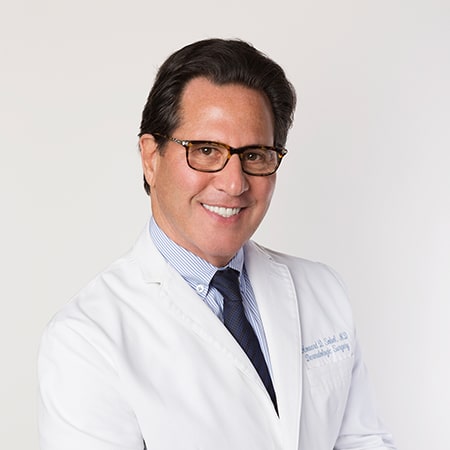
Board-Certified Dermatologic Cosmetic Surgeon · New York Magazine Best Doctor, 21 consecutive years
Preventative Botox has become one of the most debated topics in aesthetics — cheered by some as the smartest move in skincare, dismissed by others as marketing aimed at people who don’t need it yet. Both camps are half right. The honest answer depends entirely on your face, and after decades of treating patients across every decade of life at his Park Avenue practice, Dr. Howard Sobel has a clear framework for who genuinely benefits from starting Botox at Sobel Skin early — and who should save their money for now.

What “Preventative” Actually Means
Wrinkles form in two stages. First come dynamic lines — creases that appear only when you frown, squint, or raise your brows, and vanish when your face relaxes. With years of repetition, those creases etch into static lines — visible even at rest, like a paper folded so many times the crease stays.
Preventative Botox intervenes at stage one. By relaxing the muscles that fold the skin, it stops the repeated creasing that eventually etches permanent lines. You’re not treating wrinkles — you’re preventing the process that creates them. Static lines can be softened later, but never fully erased; dynamic lines caught early may never become static at all. That’s the entire logic, and botulinum toxin‘s mechanism supports it directly.
Who Genuinely Benefits From Preventative Botox
The expressive face. Some people animate intensely — deep frown lines when concentrating, forehead furrows with every sentence. Their dynamic lines are visibly deeper than peers’ at the same age, and they’re the strongest candidates: the creasing process is running fast.
Faint lines at rest, already. If you can see the ghost of your “11s” or forehead lines in a relaxed face in good light — even faintly — the transition to static lines has begun. This is the ideal moment.
Strong genetic preview. Parents or older siblings with deeply etched expression lines suggest your muscle patterns and skin are on a similar path.
Late 20s to mid 30s is where these signals typically first appear — though the calendar matters far less than the mirror.
Who Should Wait
If you’re in your early 20s with smooth skin at rest and only ordinary expression creasing, you’re not preventing anything yet — you’re just paying for a treatment your face doesn’t need. And there’s a real cost to starting too early: over years, unnecessary treatment can weaken and thin muscles that give the face its structure and expressiveness, producing a flat, aged look that’s the opposite of the goal. Any injector who’ll treat a smooth 22-year-old without a conversation about this is selling, not advising.
Dr. Sobel’s consultation for younger patients is often a “not yet” — with a note on what to watch for and a check-in in a year or two. That honesty is exactly why those patients come back when the time is right.
How Preventative Treatment Is Done Differently
Preventative dosing is lighter and more strategic than corrective dosing. The goal is softening the strength of the creasing, not freezing it — you should still animate fully, just without the deep fold. Common areas: the glabella (frown lines), forehead, and crow’s feet. Sessions are quick, and because younger patients often need fewer units, the cost and maintenance cadence are typically lighter too — often 2–3 treatments a year rather than 4. For what to expect at a first appointment, see our guide to Botox on the Upper East Side; for how long results last by age and area, see how long Botox lasts.
The Bigger Prevention Picture
Botox prevents expression lines — it does nothing for the sun damage, collagen loss, and texture changes that make up the rest of aging. The most effective prevention program in your 20s and 30s is unglamorous: daily SPF, medical-grade retinoids and antioxidants, and — where it fits — light collagen-building treatments like Vivace. Preventative Botox is one tool in that kit, valuable precisely when it’s used for the right face at the right moment.
Frequently Asked Questions
What age should you start preventative Botox?
There’s no correct number — it’s when dynamic lines start leaving faint traces at rest, typically late 20s to mid 30s for expressive faces. A consultation can tell you honestly whether you’re there yet.
Does preventative Botox really work?
Yes — for the right candidate. Preventing the repeated creasing that etches static lines is well supported by how the treatment works. It cannot prevent the other components of aging, which need sun protection and skincare.
Will starting young make me dependent on Botox?
No. If you stop, your muscles return to normal activity and you resume aging from wherever you are — never worse than baseline. What you keep is the years of etching you avoided.
How much preventative Botox do I need?
Typically less than corrective treatment — lighter, strategic dosing that softens rather than freezes. Exact units and cost are determined at consultation.
Which neurotoxin is best for prevention?
Any of the four FDA-approved options can be right — Sobel Skin carries all of them, matched to your anatomy. Our complete comparison explains the differences.
Get the Honest Answer for Your Face
Whether it’s “now,” “not yet,” or “here’s what to watch for,” the answer comes from a mirror and an expert — not a trend. Book with Dr. Howard Sobel at 960 A Park Avenue: call 212.288.0060 or schedule a consultation online.
Sobel Skin is a premier aesthetic dermatology practice serving the Upper East Side, Manhattan, and the greater New York area.