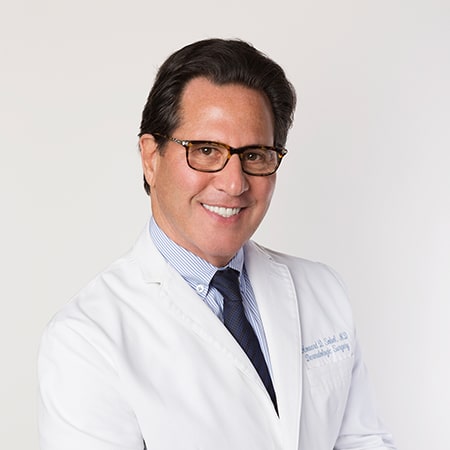
Board-Certified Dermatologic Cosmetic Surgeon · New York Magazine Best Doctor, 21 consecutive years
Before every new device and acronym entered the hair restoration conversation, there was PRP — and years later, a PRP hair treatment in NYC remains the option with the deepest clinical track record in non-surgical hair restoration. The concept is elegantly simple: your own blood contains a concentrated repair system, and PRP therapy at Sobel Skin aims it directly at your struggling hair follicles. Here’s what the treatment involves, what results realistically look like, and who benefits most.

What PRP Is — and Why Your Own Blood Works
PRP stands for platelet-rich plasma. Platelets are the cells your body dispatches to injury sites, and they arrive loaded with growth factors — proteins that trigger tissue repair, new blood vessel formation, and cellular regeneration.
A PRP session begins with a routine blood draw, no different from an annual physical. The sample spins in a centrifuge, separating and concentrating the platelets into a golden plasma several times richer than normal blood. That concentrate is then injected in a precise pattern across the areas of thinning, delivering a dense payload of growth factors directly to the follicle level — where they extend the hair growth cycle, wake dormant follicles, and thicken the miniaturized hairs characteristic of pattern hair loss.
Because the material is entirely your own, there’s nothing synthetic to react to — one reason PRP’s safety profile has held up so well across years of use.
The PRP Hair Treatment NYC Protocol: Sessions and Timeline
The standard series: 3 to 4 monthly sessions. Each visit takes under an hour, including the blood draw and spin.
Months 1–2: Shedding typically slows first — the earliest and most reliable signal the follicles are responding.
>Months 2–3: Fine new growth appears; existing hairs begin thickening.
>Months 3–6: Density improvement becomes visible in the mirror and in photos — this is where the before/afters are made.
Maintenance: One to two sessions per year protects and extends the result.
Downtime is minimal: expect scalp tenderness and possibly mild swelling for a day. Most patients treat in the afternoon and work normally the next morning. You’ll skip blood thinners and intense workouts briefly per pre/post instructions.
Who Gets the Best PRP Results
• Early to moderate pattern loss — men and women whose follicles are miniaturizing but still active
• Women with diffuse thinning — PRP is one of the best-supported options for female pattern hair loss, where surgical transplants are often poor fits
• Postpartum and stress-related shedding that hasn’t self-resolved
• Transplant patients — PRP is frequently used to strengthen results around and after a transplant
The honest limit: PRP revives struggling follicles. Where the scalp has been smooth and shiny for years, those follicles are gone, and no injection resurrects them. This is why the best predictor of PRP success is how early you start — and why an honest evaluation matters more than an eager sales pitch.
PRP Alone vs. PRP in Combination
At Sobel Skin, PRP is one tool in a complete hair restoration program. Many patients pair it with Alma TED — the needle-free ultrasound treatment that drives additional growth factors follicle-deep between PRP sessions — while more advanced cases may be candidates for stem cell hair restoration. The full comparison of all three is in our hair loss treatment guide; the short version is that combination protocols consistently outperform any single treatment for most patients.
Frequently Asked Questions
Does PRP really work for hair loss?
For the right candidate, yes — PRP has years of clinical use and study behind it, with reduced shedding typically appearing within the first two months and density improving across the series. Candidacy (early-stage loss, viable follicles) is the deciding factor.
How much does a PRP hair treatment cost in NYC?
Pricing is per session, with package pricing for the initial series. After your scalp evaluation, you’ll receive an exact protocol and quote before committing.
Does PRP hurt?
The injections are quick and performed with fine needles; most patients describe brief pinching and pressure. Numbing options are available for sensitive patients, and any tenderness resolves within a day.
How long do PRP results last?
With maintenance sessions once or twice a year, results are sustained long-term. Hair loss is progressive, so stopping treatment entirely allows the underlying process to gradually resume.
Is PRP better than Alma TED?
They’re complementary rather than competing — PRP injects your own concentrated growth factors; Alma TED drives topical growth factors deep without needles. PRP has the longer track record; Alma TED has the easier experience. Many patients do best with both.
Find Out If PRP Is Right for Your Hair
The evaluation comes first — your stage of thinning determines everything. Book with Dr. Howard Sobel‘s team at 960 A Park Avenue: explore PRP for thinning hair, call 212.288.0060, or schedule a consultation online.
Sobel Skin is a premier aesthetic dermatology practice serving the Upper East Side, Manhattan, and the greater New York area.